
Cernia di Nassau - Cernia Striata - Epinephelus striatus
Nassau grouper (Epinephelus striatus) is one of the large number of perciform fishes in the family Serranidae commonly referred to as groupers. It is the most important of the groupers for commercial fishery in the West Indies, but has been endangered by overfishing. Cernia di Nassau Cernia Striata Epinephelus striatus Intotheblue.it
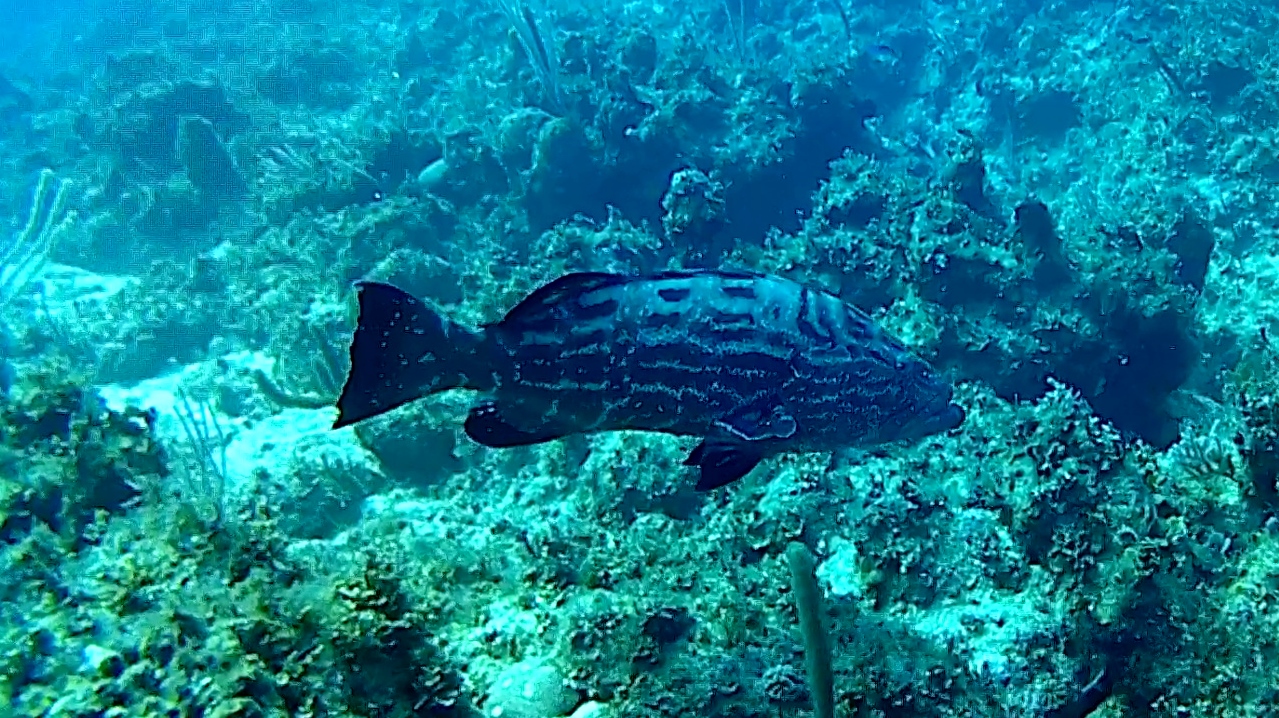
The International Union for Conservation of Nature lists the Nassau grouper as critically endangered, due to commercial and recreational fishing and reef destruction. Fishing the species is prohibited in US federal waters. The Nassau grouper is a US National Marine Fisheries Service Species of Concern and is a candidate for listing under the Endangered Species Act.
Description
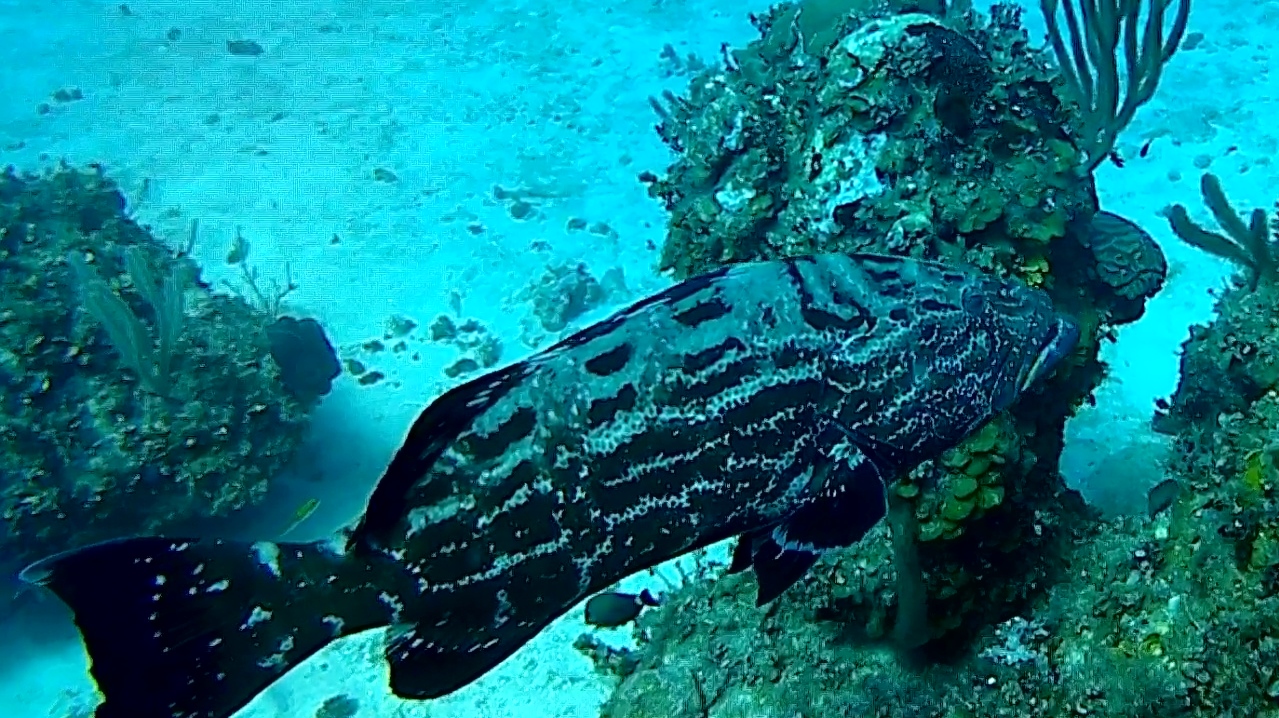
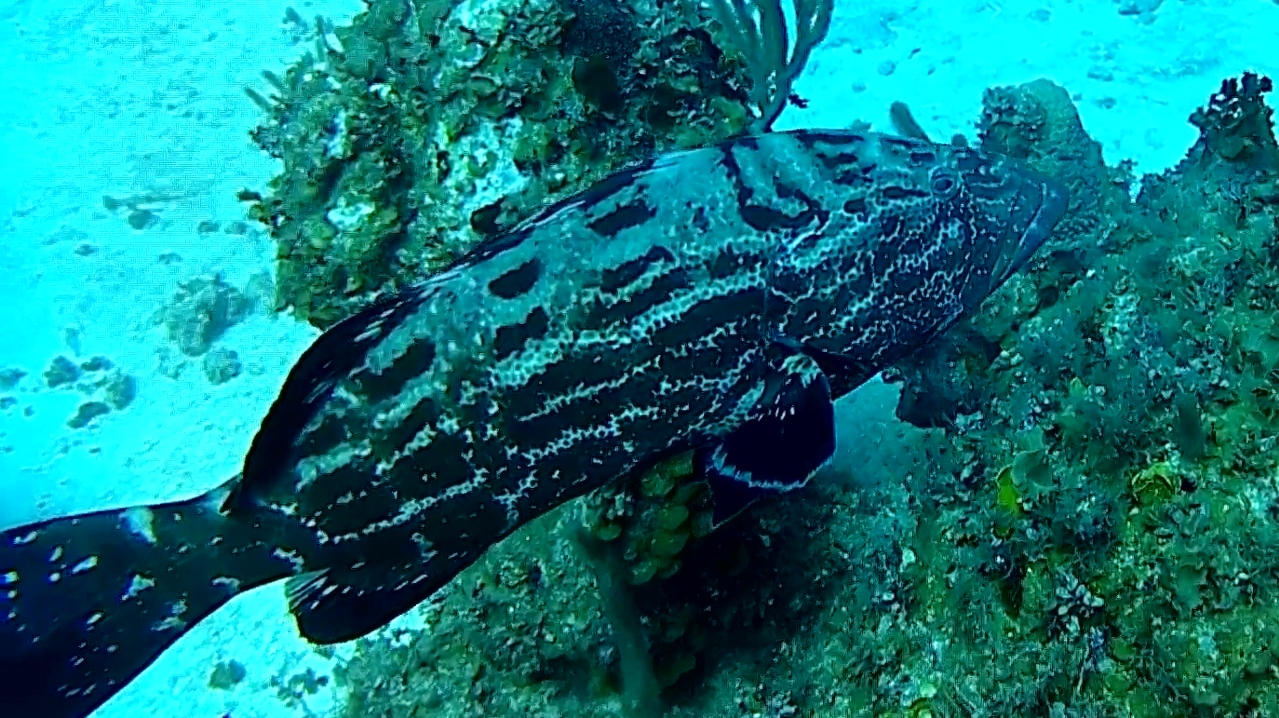
The Nassau grouper is a medium to large fish, growing to over a meter in length and up to 25 kg in weight. It has a thick body and large mouth, which it uses to “inhale” prey. Its color varies depending on an individual fish’s circumstances and environment. In shallow water (down to 60 ft), the grouper is a tawny color, but specimens living in deeper waters are pinkish or red, or sometimes orange-red in color. Superimposed on this base color are a number of lighter stripes, darker spots, bars, and patterns, including black spots below and behind the eye, and a forked stripe on the top of the head.
Distribution and habitat
The Nassau grouper lives in the sea near reefs; it is one of the largest fish to be found around coral reefs. It can be found from the shoreline to nearly 100-m-deep water. It lives in the western Atlantic Ocean, from Bermuda, Florida, and the Bahamas in the north to southern Brazil, but it is only found in a few places in the Gulf of Mexico, most notably along the coast of Belize.
Biology
It is a solitary fish, feeding in the daytime, mainly on other fish and small crustaceans such as crabs and small lobsters. It spawns in December and January, always around the time of the full moon, and always in the same locations. By the light of the full moon, huge numbers of the grouper cluster together to mate in mass spawning.
https://en.wikipedia.org/wiki/Nassau_grouper