t_Giant triton Charonia tritonis Tritone mediterraneo-2023-01-29-14h23m30s741
19
13:14

Charonia tritonis - Giant triton

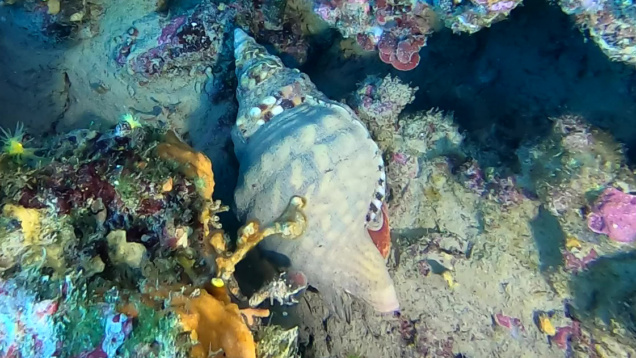
Siamo su alcuni scogli isolati ad una profondità di 40/46 metri, dove abbiamo trovato due belli esemplari di Charonia tritonis, Tritone mediterraneo. Il tritone è il mollusco e di conseguenza la conchiglia più grande del Mar Mediterraneo. In questa immersione ne abbiamo incontrati due, il primo lo abbiamo filmato casualmente sulla parete che stavamo esplorando, ci siamo accorti guardando le riprese di esserci passati accanto senza vederlo. Il secondo era dentro una buca dalla quale lo abbiamo spostato per cercare di filmarlo meglio. ...
Octopus vulgaris Common octopus Polpo comune-2023-01-20-16h36m58s834
11
04:22

Octopus vulgaris - Common octopus

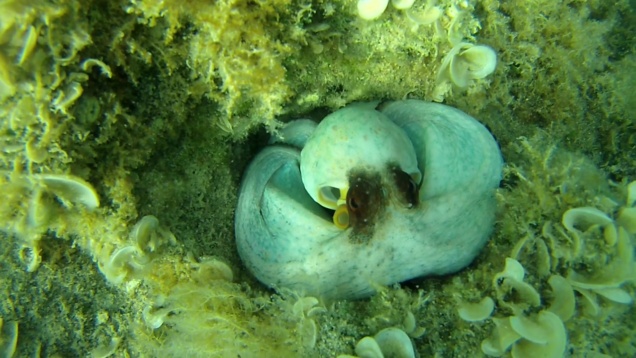
We have filmed Common octopus, Octopus vulgaris, several times on intotheblue.it but each encounter with this cephalopod mollusk is always unique and different from the previous ones. In this case, in fact, the octopus was so well camouflaged on the seabed that it was not possible to see it from just a few meters below the surface. I found it when I got so close that it scared him and then changed color since the camouflage was ineffective.
Donzella pavonina maschio con femmine Thalassoma pavo Ornate wrasse male with females intotheblue.it-2021-11-25-16h55m44s514
12
02:05

Ornate wrasse male with females

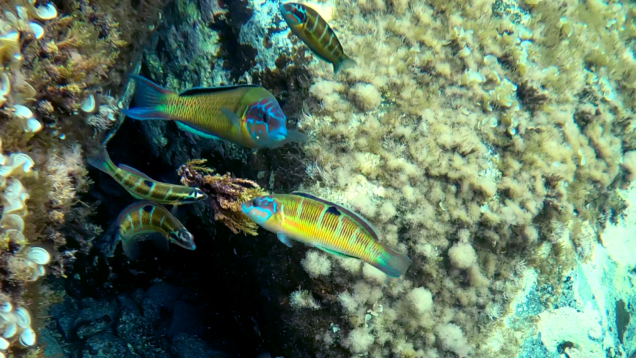
The ornate wrasse, Thalassoma pavo, is a species of wrasse native to the rocky coasts of the eastern Atlantic Ocean and the Mediterranean Sea. This species is of minor importance to local commercial fisheries, is also popular as a game fish, and can be found in the aquarium trade.
Relitto del Silvio Silvio wreck intotheblue.it-2022-12-30-15h16m52s302
25
16:52

Diving on Silvio's Wreck

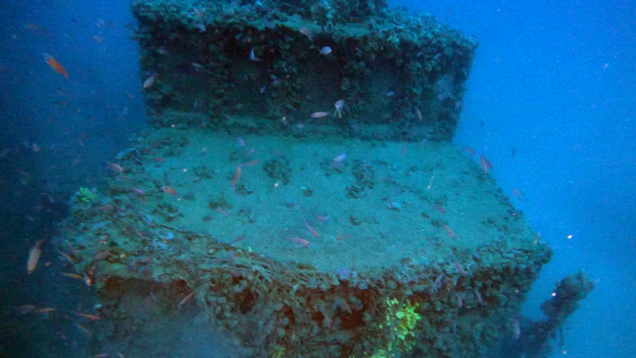
Silvio wreck is now reduced to very bad conditions due to the time that has passed but, above all, due to the fishing boats that cause continuous hooks with their trawl nets and then, in an attempt to recover them, cause further damage to the structure of the tug; the wreck is in fact almost completely surrounded by fishing nets. As you can see from the video, the seabed on which it is located is a muddy seabed and a few movements by the diver are enough to lift the mud and make visibility poor; therefore considerable experience is required to avoid accidents and dive in complete safety.