
Alga Candelabro Verde - Codium fragile
Codium fragile, commonly known as Green sea fingers Algae, is one of the most common algae in the Mediterranean, we con find this algae in a few centimeters deep just below the interdital zone, that area of the coast that depends on the tides, as it emerged in conditions at low tide and submerged at high tide. Alga candelabro verde Codium fragile green sea finger intotheblue.it
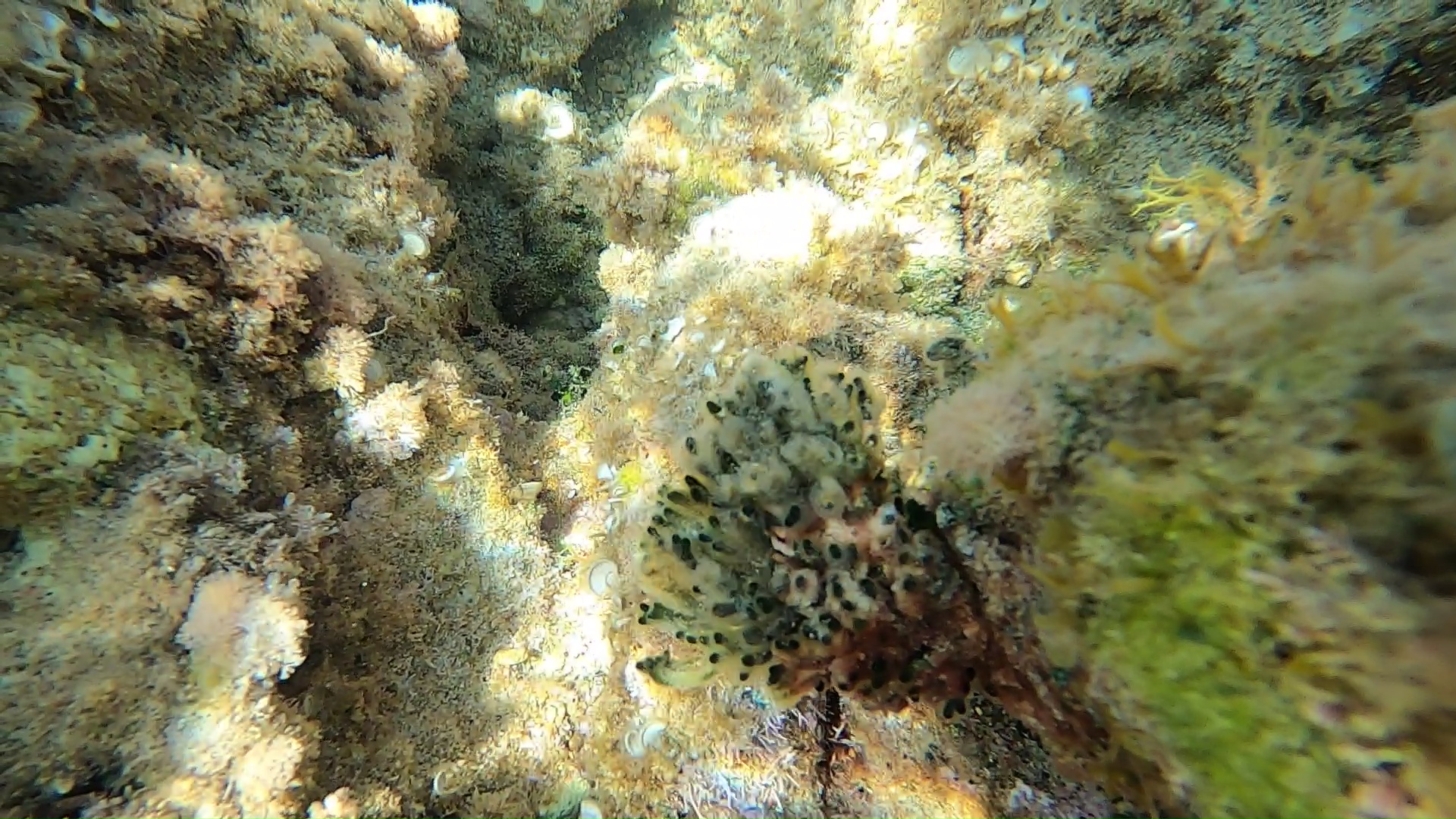
Codium fragile, known commonly as green sea fingers, dead man’s fingers, felty fingers, forked felt-alga, stag seaweed, sponge seaweed, green sponge, green fleece, and oyster thief, is a species of seaweed in the family Codiaceae. It originates in the Pacific Ocean near Japan and has become an invasive species on the coasts of the Northern Atlantic Ocean.
Description
This siphonous green alga is of two subspecies in Great Britain and Ireland. They are similar, both are dark green in color. It forms long erect finger-like fronds. These grow to 40 cm or more long branching dichotomously. The cortex of the branches is formed by closely packed utricles, these are small cylindrical club-shaped structures formed from a single cell up to 1200 µm (micrometre) long. The rounded tips of these closely packed utricles give the frond a velvety texture. The fronds hang down from rocks during low tide, hence the nickname “dead man’s fingers”. The “fingers” are branches up to a centimeter wide and sometimes over 30 centimeters long. Alga candelabro verde Codium fragile green sea finger intotheblue.it
Codium fragile occurs in the low intertidal zone, and subtidal on high-energy beaches.
It has no asexual (sporophyte) stage, and male and female gametes are both produced on separate plants.
https://en.wikipedia.org/wiki/Codium_fragile
https://www.intotheblue.it/2021/01/30/alga_candelabro_verde_codium_fragile/