Tridacna Maxima
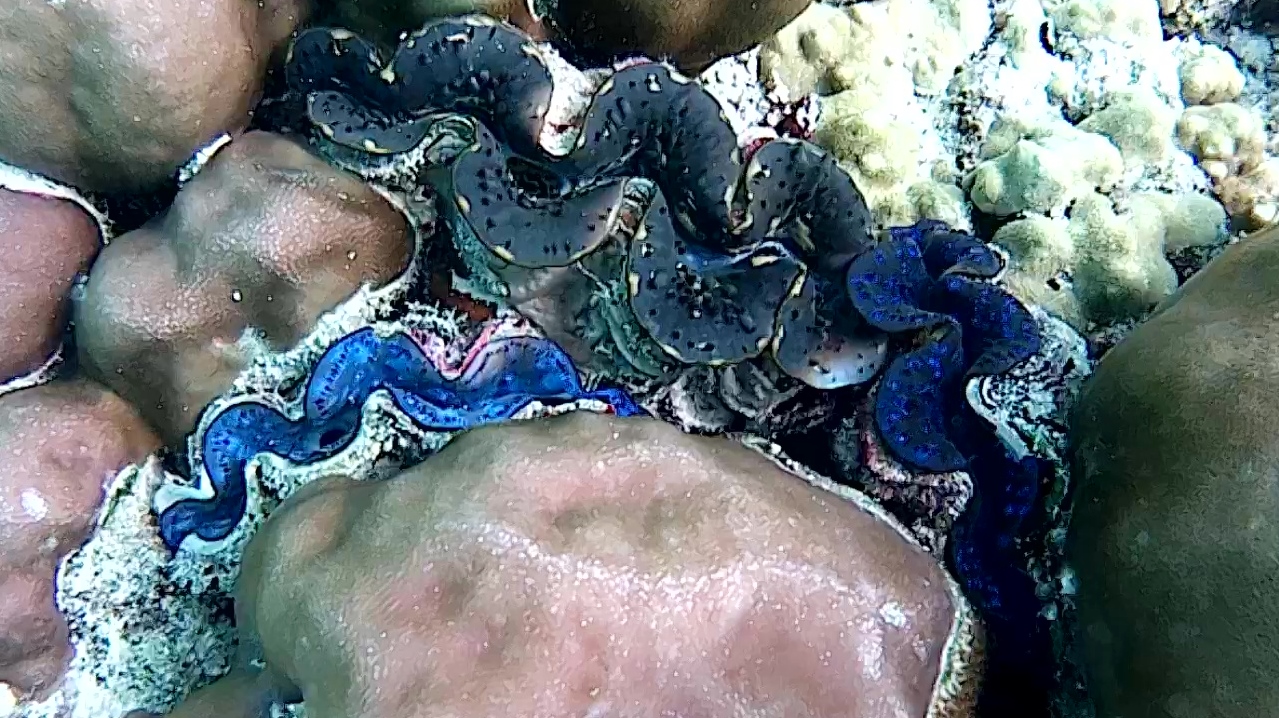
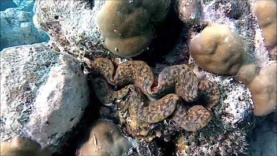
Tridacna Maxima is a giant bivalve species of the Tridacnidae family. Popular among the aquarists, it is often found in a marine aquarium. In Polynesia This species is called “Pahua ” and enters the local cuisine. Adults develop a large shell that adheres to the substrate with the fine woven linen, a tuft of long, tenacious filaments protruding from a hole near the hinge. It is a sessile bivalve that can reach an impressive size from 40-60 cm to 1,6 metres. During the day, it opens its mantle, often very colorful (blue, green, violet…) To ensure the photosynthesis of its symbiotic algae, which contribute to nourish it. It is however able to shrink very quickly and to close suddenly by breaking any object that could be found between its two solid valves actuated by an extremely powerful muscle.

Many Tridacna species are threatened. They have heavy shells, fluted with 4 to 6 folds. The mantle is often brightly coloured. They inhabit shallow waters of coral reefs in warm seas of the Indo-Pacific region. These clams are popular in marine aquaria, and in some areas, such as the Philippines, members of the genus are farmed for the marine aquarium trade. They live in symbiosis with photosynthetic algae (zooxanthellae). Some species are eaten by humans. All species in the genus Tridacna are protected under CITES (Convention on International Trade of Endangered Species).

Light penetrates the mantle through small lens-like structures called ocelli. They are sessile in adulthood. By day, the clams spread out their mantle so that the algae receive the sunlight they need to photosynthesize, whereas the colour pigments protect the clam against excessive light and UV radiation. Adult clams can get most (70–100%) of their nutrients from the algae and the rest from filter feeding. When disturbed, the clam closes its shell. The popular opinion that they pose danger to divers who get trapped or injured between the closing sharp-edged shell is not very real, as the closing reaction is quite slow. Their large size and easy accessibility has caused overfishing and collapse of the natural stocks in many places and extirpation in some of the species.
(extract from Wikipedia)


You must be logged in to post a comment.